
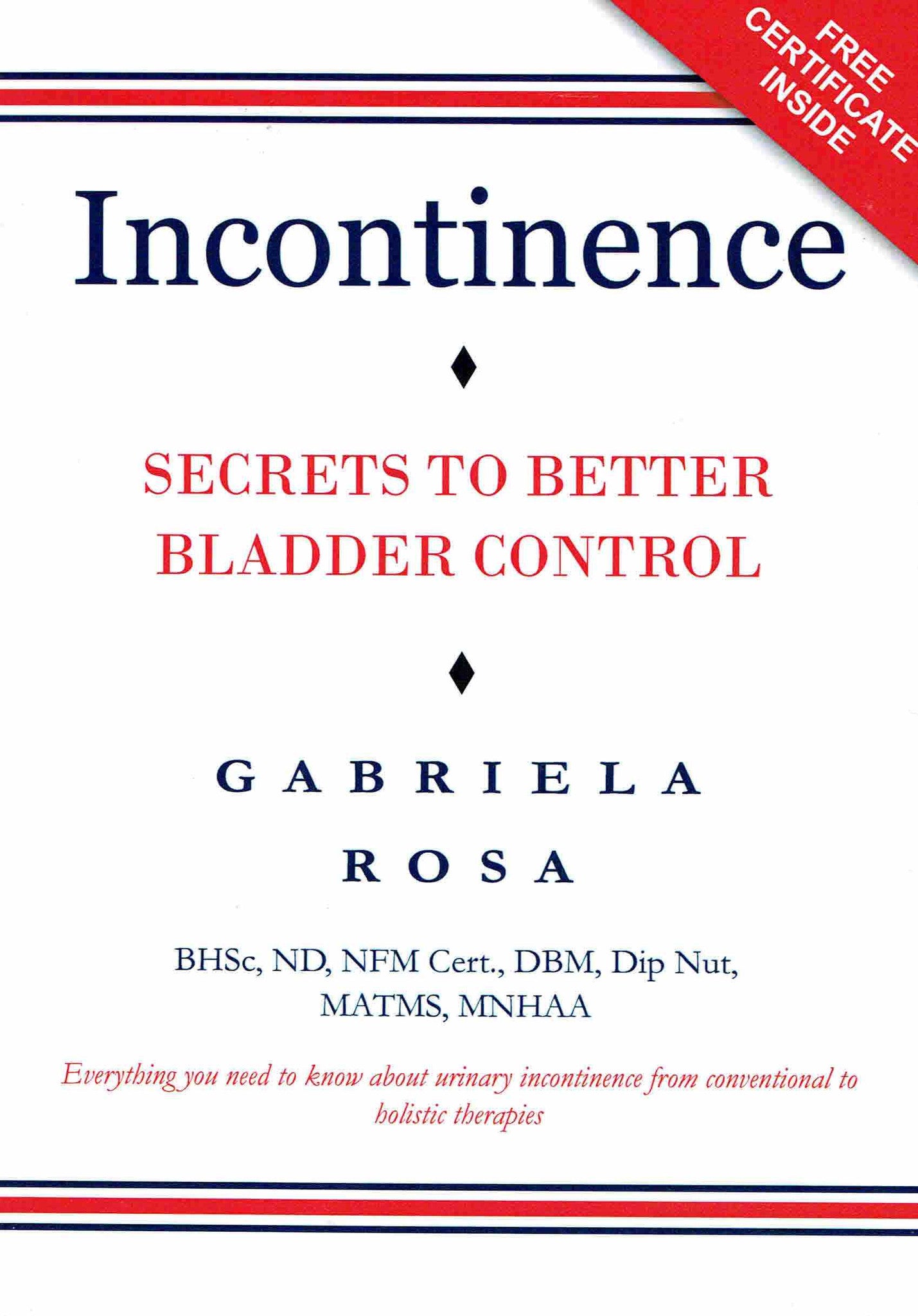
Incontinence - Secrets to Better Bladder Control
$29.95
| /
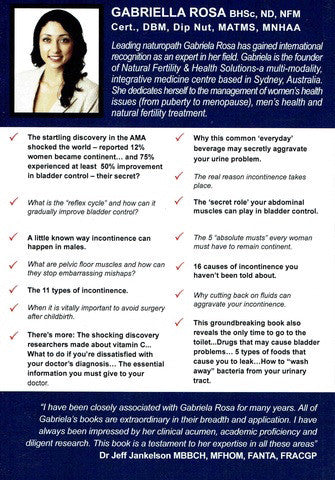
This ground breaking book reveals the secrets to improved bladder control and provides strategies to support the health of your pelvic floor and urinary system. With this book guiding you, you can avoid embarrassing mishaps and have confidence that you are developing the health of your urinary system.
Summary
Break free from the silence and isolation of urinary incontinence.
This groundbreaking book addresses a devastating problem that affects millions yet remains shrouded in embarrassment.
Inside, you'll discover the startling discoveries researchers have made, including the common beverage that secretly aggravates leaks and the little known role of vitamin C.
Learn about the 16 causes of incontinence you haven't been told about, the "reflex cycle" for improving control, and the 5 types of foods to avoid.
This is not just theory; it's a practical guide to self-help strategies and a preparation for professional care, empowering you to take back control of your life and your dignity.
Foreword
Urinary Incontinence is a major problem in medical practice, not as much due to the clinical difficulty in treating the disease, but rather due to the reluctance of sufferers to discuss the problem with their practitioners.
Approximately one third of the population suffers from this distressing problem, which represents about 4 million Australians. It is all the more distressing that only one third of sufferers seek assistance, due to the lack of knowledge on the part of the patient or their practitioner about the sometimes simple treatment options.
The devastating personal consequences of the impact on quality of life often lead to social isolation. It is embarrassing and has a profound effect on self-esteem. Sufferers plan their lives around the location of toilets on route. Although incontinence is more common in older women, it can strike any sex at any age. Urinary incontinence is not a normal part of ageing, nor an inevitable consequence of childbirth or menopause. Many causes of incontinence are completely curable, and the majority controllable by simple measures.
The direct and indirect financial costs of the condition are an added burden for the sufferer and the economy. The cost of buying pads and appliances is often beyond the reach for some patients, with many using toilet paper or re-using pads. A study in the Medical Journal of Australia identified three cost components: "direct costs”, which include personal costs (e.g., pads and replacement of urine-soaked clothes), and treatment costs (born by patients and government); "indirect costs", which include lost productivity both in the home and in outside employment; and "intangible costs", which are most difficult to measure financially, but include psychological distress and impaired physical or mental health.
The Australian Department of Health and Aged Care has set aside $15 million to fund a multidisciplinary strategy to ensure greater reach of education to healthcare practitioners and the public.
Incontinence -Facing the Problem fulfills much of the education ambitions of the Australian National Continence Management Strategy for the silent two thirds of sufferers by providing a broad overview of the various causes of Urinary Incontinence in both males and females, as well as a detailed assessment of the treatment strategies. I am most impressed at the balance of the ease of access of the information, yet it still remains valuable to the experienced practitioner. A UI sufferer armed with this valuable book, can safely and effectively apply the self- help advice, yet be well prepared for more intensive treatment options offered by professionals.
I have been closely associated with Gabriela Rosa for many years. All of Gabriela's books are extraordinary in their breadth and application. I have always been impressed by her clinical acumen, academic proficiency and diligent research. This book is a testament to her expertise in all these areas.
Dr Jeff Jankelson
MBBCH, MFHOM, FANTA, FRACGP
Table of Contents
FOREWORD - Page V
ABOUT THE AUTHOR - Page viii
YOUR QUICK START GUIDE TO URINARY INCONTINENCE - Page 1
INTRODUCTION - Page 7
CHAPTER 1: What Is The Urinary System? - Page 15
CHAPTER 2: Types and Causes of Urinary Incontinence - Page 21
CHAPTER 3: Urinary Incontinence in Women - Page 37
CHAPTER 4: Urinary Incontinence and Men - Page 43
CHAPTER 5: Before Seeing Your Doctor - Page 55
CHAPTER 6: Seeking Medical Help - Page 63
CHAPTER 7: Medical Treatments and Medications for Urinary Incontinence - Page 67
CHAPTER 8: Surgical Treatments for Urinary Incontinence - Page 77
CHAPTER 9: Natural Remedies and Treatments - Page 85
CHAPTER 10: Maintaining a Healthy Bladder - Page 105
CHAPTER 11: Exercise and Urinary Incontinence - Page 121
CHAPTER 12: Myths and Faces About Urinary Incontinence - Page 129
CHAPTER 13: Making Sense of Urinary Incontinence - Page 133
GLOSSARY - Page 138
ENDNOTES - Page 152
Specifications
Published: 2008
Format: Paperback
Language: English
Audience: General Adult
Publisher: Quantum Health
Edition Number: 1
Dimensions (cm): 21 cm (H) x 15 cm (W)
Weight (kg): 264 g